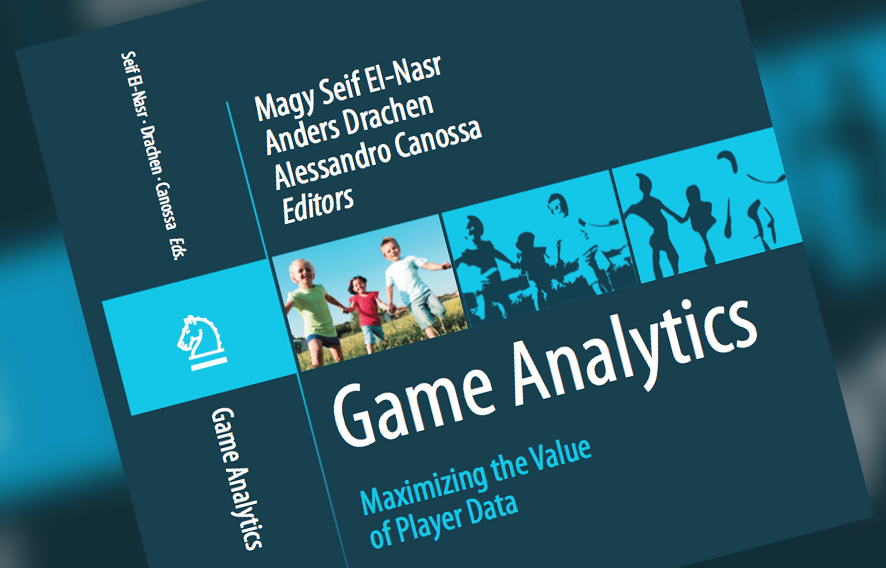
Some textbooks are “how-to” recipe books that map out a sequence of tasks intended to inspire the reader to acquire a set of skills. Other texts often are collections of academic papers that, while providing a good overview of a topic, may not completely provide that hands-on training that practitioners often desire. And then there are some texts that help to frame why technical skills are necessary for solving core business problems, and Game Analytics (El-Nasr, Drachen, and Canossa) provides that foundation.
The book I segmented into eight parts. Part 1’s Introduction frames the basics of game analytics within the contexts of the game business – who the stakeholders are, standard game industry metrics, and the benefits of analytics within those contexts. Part 2 discusses data collection – game telemetry and game user research. These chapters provide additional depth to Part 1’s introduction.
Parts 3 and 5 actually provide guidance for the aspiring games analyst. Between discussions about game data mining and feature engineering and other methods fo collecting data about game play, the chapters in these parts direct the reader in understanding how techniques are adapted to drive game intelligence and influence game play and game design. Part 4’s interlude into visualization shows how visual communications enhance the game analyst’s process, and reinforces the holistic necessity f a variety of analytics methodologies to complement the business framework.
The last 3 parts (on player communities, learning, and content generation) augment and build upon what is developed in the first 6 parts. As an instructor teaching an introductory course on game, entertainment, and media analytics, I find this book to be a valuable contribution to enabling the students to have visibility into the whys and hows of the process. That being said, although the collection of papers does provide a sound foundation, the students still need additional content in terms of training. Game Analytics (El-Nasr, Drachen, and Canossa) is a critical component of my course structure that drives discussion topics about motivating factors for developing hands-on skills.